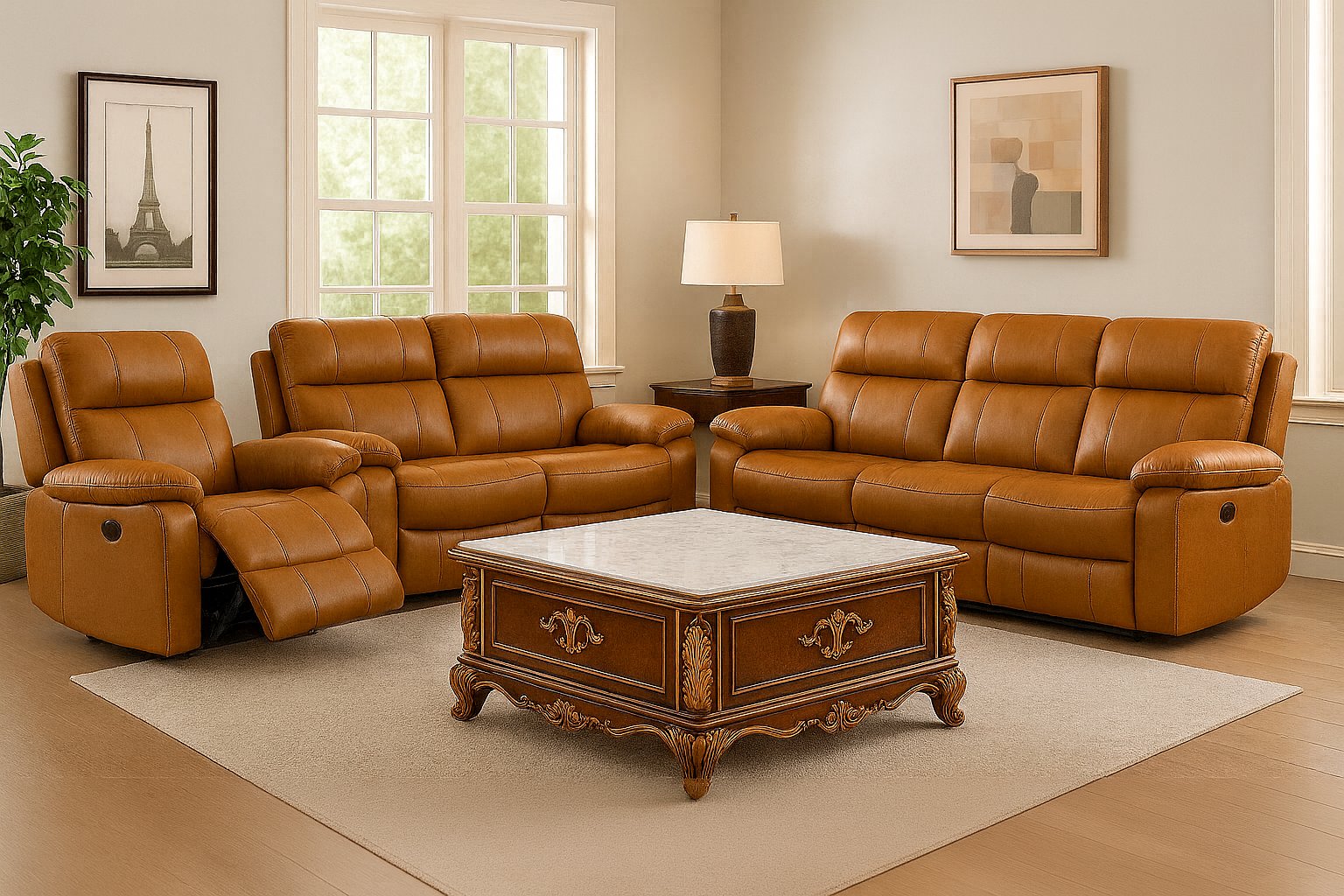
Walk into any furniture showroom and the sales team will often try to sell you a 'sofa with recliner function' for your home theatre. Don't fall for it. There are fundamental structural and ergonomic differences between a true home theatre recliner and a living room recliner — differences that matter enormously over years of daily use.
The Core Difference: Fixed Gaze vs Variable Activity
A living room recliner is designed for varied positions and varied activities — reading, napping, watching TV, socialising. It prioritises versatility.
A home theatre recliner is designed for one specific activity — sustained, comfortable viewing of a screen at a fixed height and distance for 1.5–3 hours at a time. Every design decision — backrest angle, headrest position, footrest height — is optimised for that single use case.
Key Structural Differences
1. Headrest Design
Theatre recliners have adjustable padded headrests specifically positioned to support the head and neck while gazing at a screen at a fixed height. Without this support, you'll experience neck fatigue within 45–60 minutes of viewing.
Living room recliners may have a built-in headrest as part of the backrest, positioned for general relaxation — not optimised for screen viewing angles.
2. Armrest Console Integration
Theatre recliners have flat, wide armrests at the precise height to hold a drink cup-holder, phone or remote control — at a natural reach from a reclined position. Many include cup holders, USB ports and storage consoles.
Living room recliners may have armrests that are styled for aesthetics rather than optimised for screen-viewing comfort.
3. Footrest Height at Full Recline
Theatre recliners (dual motor) raise the footrest to approximately heart level when fully reclined — enabling true zero-gravity positioning that reduces circulation fatigue during long sessions.
Living room recliners often do not achieve full horizontal positioning — they create a comfortable semi-reclined angle but not the true zero-gravity position.
4. Row Configuration
Theatre recliners are designed to be configured in rows — they are connected side-by-side with shared armrests between adjacent seats. This allows precise row spacing and walkway planning.
Living room recliners are standalone units or sofa-style — not designed for row arrangement.
Price Comparison
| Feature | Living Room Recliner | Theatre Recliner |
|---|---|---|
| Starting Price | ₹15,000–₹30,000/seat | ₹22,000–₹35,000/seat |
| Motor Type | Usually single or manual | Manual / Single / Dual |
| Row Configuration | No | Yes ✓ |
| Headrest | Fixed | Adjustable ✓ |
| Cup Holders | Rarely | Standard ✓ |
| USB Ports | No | Optional ✓ |
| Zero-Gravity | No | Yes (dual motor) ✓ |
| Warranty (Sky Recliners) | 1yr foam + 5yr mech | 1yr foam + 5yr mech + 2yr motor |
Can I Use a Living Room Recliner in My Theatre?
Technically yes — but the experience will be noticeably inferior. Common issues reported by customers who tried this:
- Neck fatigue from non-optimised headrest positioning
- No flat surface for drinks — spills on the armrest or floor
- Seats that look mismatched in a row
- Inability to recline without bumping the row behind
- Missing USB / charging convenience during long viewing
The Verdict
For a living room where the recliner will be used for varied activities, a living room recliner is perfectly suited. For a dedicated home theatre where you'll be watching films for 2+ hours at a time, a purpose-built theatre recliner will deliver a dramatically better experience.
At Sky Recliners, we manufacture both — but for a dedicated home cinema, we will always recommend our theatre recliner range. The difference in comfort over a 3-hour film is not subtle. It is transformative.